WASHINGTON-Today, the U.S. Department of the Treasury’s Office of Foreign Assets Control (OFAC) sanctioned three individuals involved in operating and facilitating cyber scam centers in Southeast Asia, as well as two affiliated companies. The individuals designated today include operators of scam compounds that target Americans through virtual currency investment fraud and affiliates of armed groups that provide protection and support to scam-center networks in Southeast Asia.
“Under President Trump’s leadership, Treasury has aggressively targeted overseas scam compounds to protect Americans from fraud,” said Secretary of the Treasury Scott Bessent. “We will continue to use all available tools to disrupt and dismantle the networks that enable scam compounds to operate.”
These actions are being taken in furtherance of President Trump’s Executive Order (E.O.) 14390 of March 6, 2026, “Combating Cybercrime, Fraud, and Predatory Schemes Against American Citizens,” which orders the U.S. Government to unleash every available tool to stop foreign-backed criminal networks that exploit vulnerable Americans through cybercrime, cyber-enabled fraud, and extortion. Today’s action further reflects OFAC’s coordination with the Federal Bureau of Investigation’s New York Field Office, Department of Justice’s Scam Center Strike Force, and the Drug Enforcement Administration, and the Homeland Security Task Force and National Coordination Center. OFAC is taking today’s actions pursuant to E.O. 13694, as amended by E.O. 13757, E.O. 14144, and E.O. 14306 (“E.O. 13694, as further amended”).
ZHAO HUI: A SCAM CENTER OPERATOR
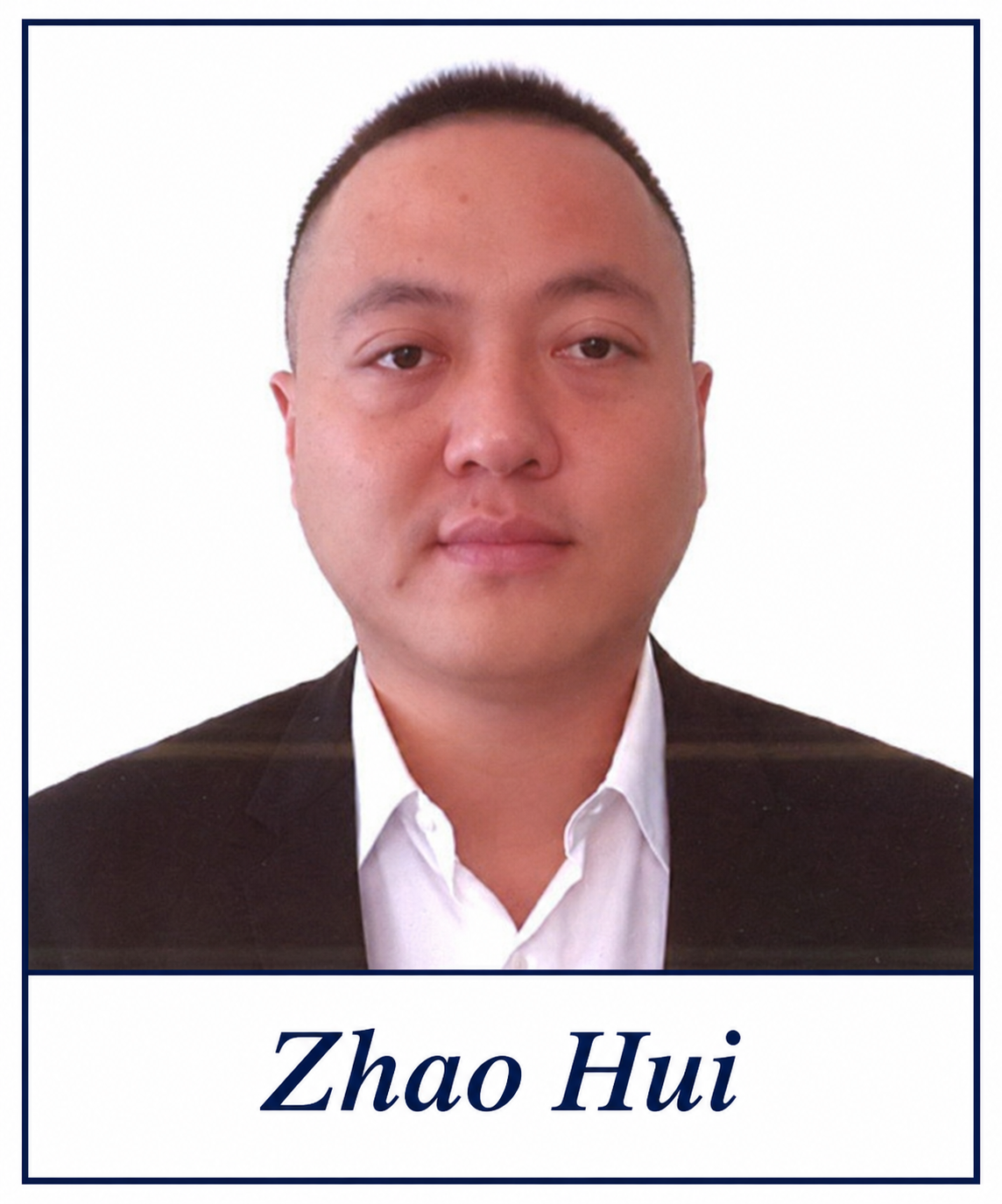
Zhao Hui (Zhao) is a Cambodian national who leased a scam center owned by the OFAC-designated Prince Group TCO and paid protection fees to the OFAC-designated leader of the Prince Group TCO, Chen Zhi. In addition, Zhao owned a scam compound in Cambodia independent of Prince Group TCO. At this scam compound, Zhao was directly involved in scam operations and managed this scam compound’s leases. This scam compound primarily targeted Americans and Europeans. Such scam compounds conduct virtual currency investment scams. Since Zhao has leased a scam compound and owned and operated an additional scam compound in Cambodia, he has materially assisted, sponsored, or provided financial, material, or technological support for, or goods or services to or in support of virtual cryptocurrency investment scams, an activity described in subsection 1(a)(ii) of E.O. 13694, as further amended.
Zhao is being designated pursuant to E.O. 13694, as further amended, for having materially assisted, sponsored, or provided financial, material, or technological support for, or goods or services to or in support of, an activity described in subsection 1(a)(ii) of E.O. 13694, as further amended.
Zhao is the chairman of the board of directors of Cambodia-based construction company Bei Fang Bo Lin Construction Decoration Co., Ltd. (Bei Fang Bo Lin) and management and consultancy company ZHZ Investment Consulting Co., Ltd. (ZHZ Investment).
Bei Fang Bo Lin and ZHZ Investment are being designated pursuant to E.O. 13694, as further amended, for being owned or controlled by, or having acted or purported to act for or on behalf of, directly or indirectly, Zhao Hui.
THE DKBA’S FACILITATION OF SCAM COMPOUND ACTIVITY
In recent years, armed groups in Burma have transformed a strip along the Thai-Burmese border into one of the world’s highest concentrations of scam centers. The Democratic Karen Benevolent Army (DKBA) is an ethnic armed group previously designated by OFAC for supporting cyber scam centers in Burma that target Americans using fraudulent investment schemes. DKBA actors not only provide security for scam compounds and permit their continued operation, but also actively participate in violence against victims of human trafficking trapped inside the compounds.
Since December 2025, General Saw Shwe Wah has been the commander-in-chief of the DKBA, replacing General Saw Steel, who OFAC designated in November 2025 pursuant to E.O. 13694, as further amended.
Colonel Saw A One is the DKBA commander who oversees security in the Three Pagodas Pass in Karen State near the Thai border. The region has seen expansion of new buildings intended for telecom scam operations, with many scam actors entering the area with the assistance of the DKBA, which also protects them. Saw A One reportedly owns a plantation where scam operations occur and has contracted for scam operations.
Saw Shwe Wah and Saw A One are being designated pursuant to E.O. 13694, as further amended, for being or having been leaders, officials, senior executive officers, or members of the board of directors of the DKBA, a person whose property and interests in property are blocked pursuant to E.O. 13694, as further amended.
SANCTIONS IMPLICATIONS
As a result of today’s action, all property and interests in property of the designated persons described above that are in the United States or in the possession or control of U.S. persons are blocked and must be reported to OFAC. In addition, any entities that are owned, directly or indirectly, individually or in the aggregate, 50 percent or more by one or more blocked persons are also blocked. Unless authorized by a general or specific license issued by OFAC, or exempt, OFAC’s regulations generally prohibit all transactions by U.S. persons or within (or transiting) the United States that involve any property or interests in property of designated or otherwise blocked persons.
Violations of U.S. sanctions may result in the imposition of civil or criminal penalties on U.S. and foreign persons. OFAC may impose civil penalties for sanctions violations on a strict liability basis. OFAC’s Economic Sanctions Enforcement Guidelines provide more information regarding OFAC’s enforcement of U.S. economic sanctions. In addition, financial institutions and other persons may risk exposure to sanctions for engaging in certain transactions or activities involving designated or otherwise blocked persons. The prohibitions include the making of any contribution or provision of funds, goods, or services by, to, or for the benefit of any designated or blocked person, or the receipt of any contribution or provision of funds, goods, or services from any such person. Non-U.S. persons are also prohibited from causing or conspiring to cause U.S. persons to wittingly or unwittingly violate U.S. sanctions, as well as engaging in conduct that evades U.S. sanctions. Individuals located in the U.S. or abroad who provide information about sanctions violations to FinCEN’s whistleblower incentive program may be eligible for awards if the information they provide leads to a successful enforcement action that results in monetary penalties exceeding $1,000,000.
The power and integrity of OFAC sanctions derive not only from OFAC’s ability to designate and add persons to the SDN List, but also from its willingness to remove persons from the SDN List, when consistent with relevant statutes and other authorities. The ultimate goal of sanctions is to bring about a positive change in behavior. What constitutes a sufficient change in circumstance will vary based on context, including the status of the broader geopolitical circumstances affecting the national security and foreign policy interests implicated by the declared national emergency.