U.S. Transportation Secretary Sean P. Duffy and Federal Aviation Administrator (FAA) Bryan Bedford today advocated for an additional $50 billion in critical funding from Congress to complete a Brand New Air Traffic Control System and improve the flying experience for millions of Americans. While at the Senate, the officials also provided an update on the Department’s investigation into the cause of last Friday’s nationwide ground stop.
REMINDER: Intermittent issues with telecommunications and radar systems used by Air Traffic Control led the FAA to issue a nationwide ground stop out of an abundance of caution. FAA’s highly trained air traffic controllers and commercial pilots followed established protocols to land every plane safely. Operations have since returned to normal.
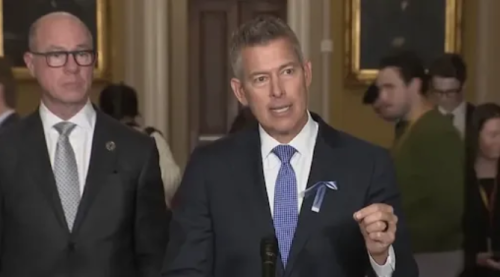
You can watch the entire press conference HERE.
Secretary Duffy on the safety of the airspace:
“I’m not going to take a risk with anyone’s life. I will not do that. So if we see an issue, I want people to get safely to their destinations. I don’t want to see disruptions. We’re working on delays and cancellations. But when rubber meets the road, safety will always come first for the administrator and me.”
Secretary Duffy on the latest updates on the issue that impacted air traffic control:
“What we did after the airspace was reopened, we were able to take control of the router. That was our issue. By the way, this was the 69th installation of that router. Sixty-eight times it worked well. This one, the router started to broadcast into our network and it started to overload the network…L3Harris, who was the owner of our network, and they monitor our network, run our network-they have it. We went to their facility with the router in Florida. So at that facility is L3Harris, HP is there, Cisco is there, the FAA is there. And I called Kash Patel (FBI), and I said, you know, there’s a lot of things happening right now that all of us don’t know where it’s coming from. And I’ve been told by our national security three letter agencies that we weren’t hacked, but I think it’s important that we have all precautions. So I asked Kash to send me part of his FBI team to be part of the analyzing of this router. We’ve been able to recreate what happened in El Dorado, but the root cause of what happened, we don’t have clarity yet. And I promise all of you that when I know what happened with that router, injecting that overload into our system, I will most definitely share that with you.”
Secretary Duffy on claims that the Trump Administration hasn’t invested the $12.5 billion from the Working Families Tax Cut Act:
“I’ve been pounding the drum about the need for investment in aviation-that [it’s been] neglected. Our system is old. It’s showing its age. We have to make the investments. Congress gave me a historic down payment of $12.5 billion. Now, I’ve heard some people say, well, you haven’t spent the money, right? Where’s all the money? So let me just explain that to you all. What’s happening here? The Congress gave us very specific categories in which we had to spend the money, and so because our airspace is so big, we have so much equipment in the airspace. I can’t go to, say, a Best Buy and just take it off the shelf. We actually have to order the equipment. And then the companies that get the contracts, they actually have to build the equipment for us to then take possession. The senators in here would have been very annoyed had I prepaid for the equipment. So I only pay when they deliver. So we’ve had a lot of radios and voice switches and surface awareness systems that have been delivered, but not all of them. So I still hold some of that money. A good example is that we haven’t built radar in America for 30 years. And I thought that if we’re going to have a historic buy for radar, we should build those radars in America with American workers. So the companies that got the contract, they set up facilities in America, one in Florida, one in Kansas, and they’re building those radars. They have a contract with us to purchase the radar. Well, I haven’t taken the delivery of those radars yet. In a few months, I’m going to. And when I do, when I receive them, I’ll pay for them… I only am going to pay when they deliver. And I think the point here is all the money has been set aside for this mission of modernizing the airspace.”
Secretary Duffy on the Trump Administration’s request for $50.1 billion from Congress to fully modernize America’s air traffic control system:
“So as part of this new ask to Congress…We’re switching this old network, this old architecture from copper to fiber, from analog to digital. But it’s old architecture. We need a network that is state of the art, that’s resilient. I’ve asked for money to build that new network and the Congress is very interested in that. The software that we use to manage the airspace was developed in the mid 90s. It works. It’s functional, but the advancements in software, if we are able to go out, develop and buy it, it’s going to give us far greater safety and far more efficiency in the airspace. And it’s time. It’s been 30 years. It’s time that we make this investment. On top of that…we have towers, TRACONS, and centers. The centers which are the controls [of the] upper altitude airplanes. We have 22 of them. You guys know the newest one we have was built in 1969. I mean, that’s how old this stuff is. We have old towers from the 60s. Old TRACONs come from the 60s. I’m asking the Congress to, as part of this historic investment, invest in that infrastructure. We have a country that’s grown and expanded. Our people go to different places. We’ve seen growth in a lot of our cities, and I want to invest in their infrastructure. Some of them need new runways. We need money for some of our airports…I wanted to put everything on the table. I wanted to show that, show it all to them. And I know that Congress will work its will. They’ll pressure test it, they’ll look at it and they’ll make a determination and a decision on what they see as their priorities.”
Secretary Duffy on the urgency to modernize:
“Some of you will say I’m moving too fast. Some of you say I’m moving too slow. Maybe I’m Goldilocks and I’m going just right here…We will not go faster than what the safety mission would allow. We are moving at the right pace, but I would just tell you, the longer we stay on an old rickety network, the less safe it becomes. So we have to. We do have to charge forward. We do have to get this work done. Otherwise, staying on the old system for longer is going to mean more risk as opposed to fixing the system, and you’re going to reduce the risk.”
Additional Information:
With $12.5 billion from the Working Families Tax Cut passed in July 2025, the Department has been deploying upgrades to significantly enhance the safety of the airspace. All of that money has been allocated and is on track to be fully implemented by the end of 2028.
The pace of this deployment has been unprecedented, ensuring the money has produced real, tangible results:
- Replacing 70% of copper telecommunications lines with high-speed fiber, 5G wireless or low-earth-orbit connectivity across ATC facilities nationwide
- Deploying Surface Awareness Initiative technology at 143 control towers
- Converting 469 radio sites to modernized systems
- Installing electronic flight strips at 25 towers
- Installing 224 IP Voice Switch systems at towers
- Installing 18 new tower simulation systems
- Installing nine SMR4 Surface Movement Radars at seven airports
- Transitioning five facilities from floppy disks to a 21st century information system
The American people can track the FAA’s progress live HERE.
REMINDER: Congress placed parameters on the funding outlining exactly how much of the total package could be spent on specific categories of work. The Department does not have the legal flexibility to move funds from one workstream to another.